Designing a smarter way to manage patient reviews
Built Smart Reviews from the ground up — a product that gives medical practices a single place to monitor patient reviews across multiple sites, replacing fragmented manual tracking with one unified view.
Reviews everywhere, with no central place to see them.
Patient reviews shaped how practices were perceived online — but practices had no efficient way to keep up with what was being said about them.
- 01 Reviews scattered across multiple platforms with no unified view
- 02 Patient feedback decentralized and difficult to act on
- 03 No structured way to encourage patients to leave reviews after a visit
- Practices fell behind competitors with stronger review presence
- Negative feedback often went unnoticed for days or weeks
- Time was lost manually checking review sites one platform at a time
A new product on an established platform.
Solutionreach connects medical practices with patients through reminders, online scheduling, and direct messaging. Smart Reviews would extend that — using the practice's existing relationship with each patient as the foundation for a stronger online review presence.
But before we built anything, we needed to validate that practices wanted what we thought they wanted, and understand how they were currently handling reviews.
Validating the need before designing the product.
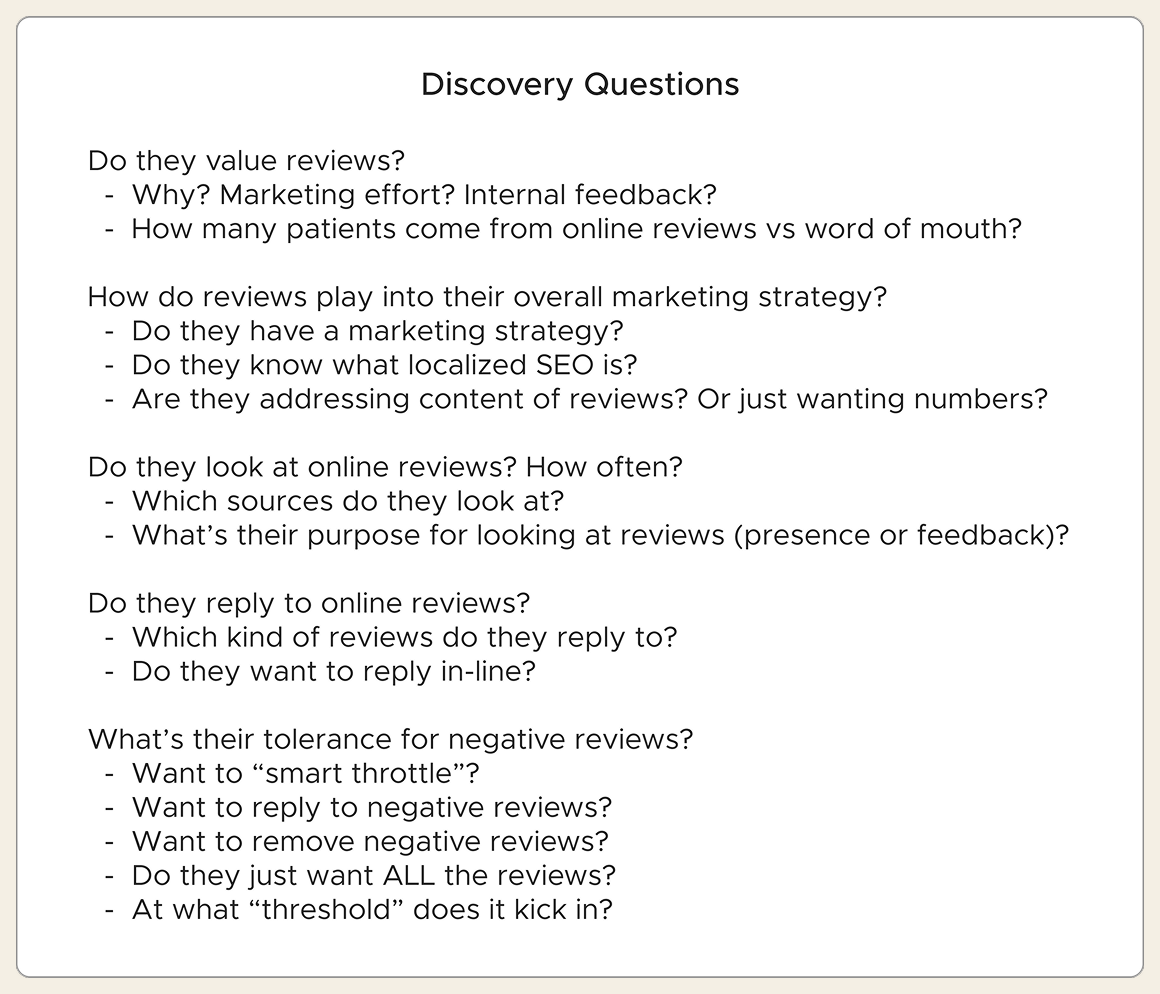
We started with assumptions about how customers handled online reviews, and worked methodically to confirm or reject each one. Each round of research narrowed what the MVP needed to do.
-
01Assumptions
Wrote down our hypotheses — what practices tracked, what they wished they could track, and what gaps they were working around. Each became a research question.
-
02Initial surveys
A short survey to existing customers gave us baseline patterns. Responses confirmed some assumptions, challenged others, and surfaced new questions worth digging into.
-
03Customer interviews
Followed up with in-depth interviews — digging into how practices were currently soliciting and tracking reviews, and what would actually change their workflow.
-
04Takeaways
Two findings held up across both surveys and interviews — practices were struggling to manage their online presence, and patient feedback was decentralized and difficult to access.
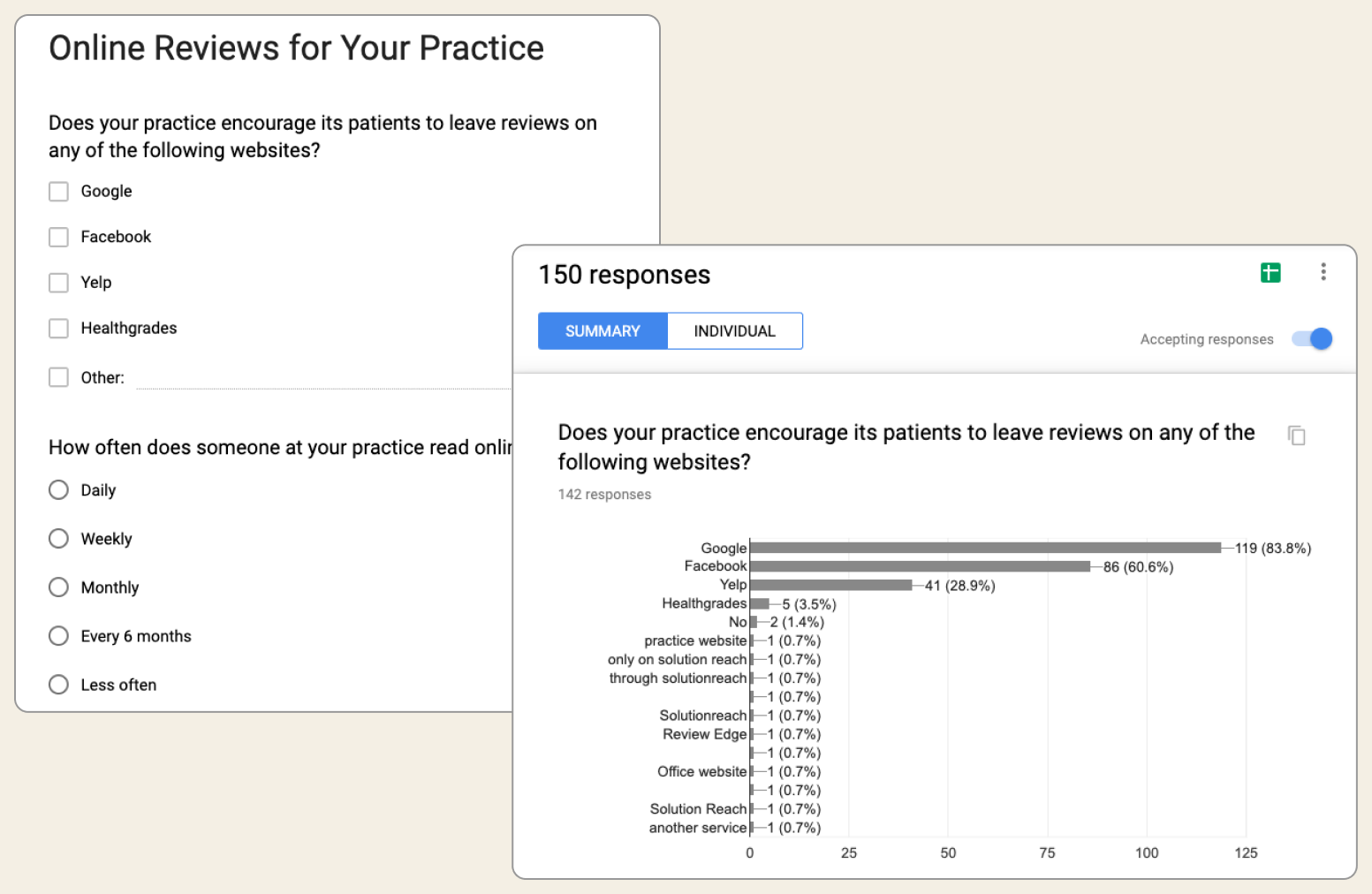
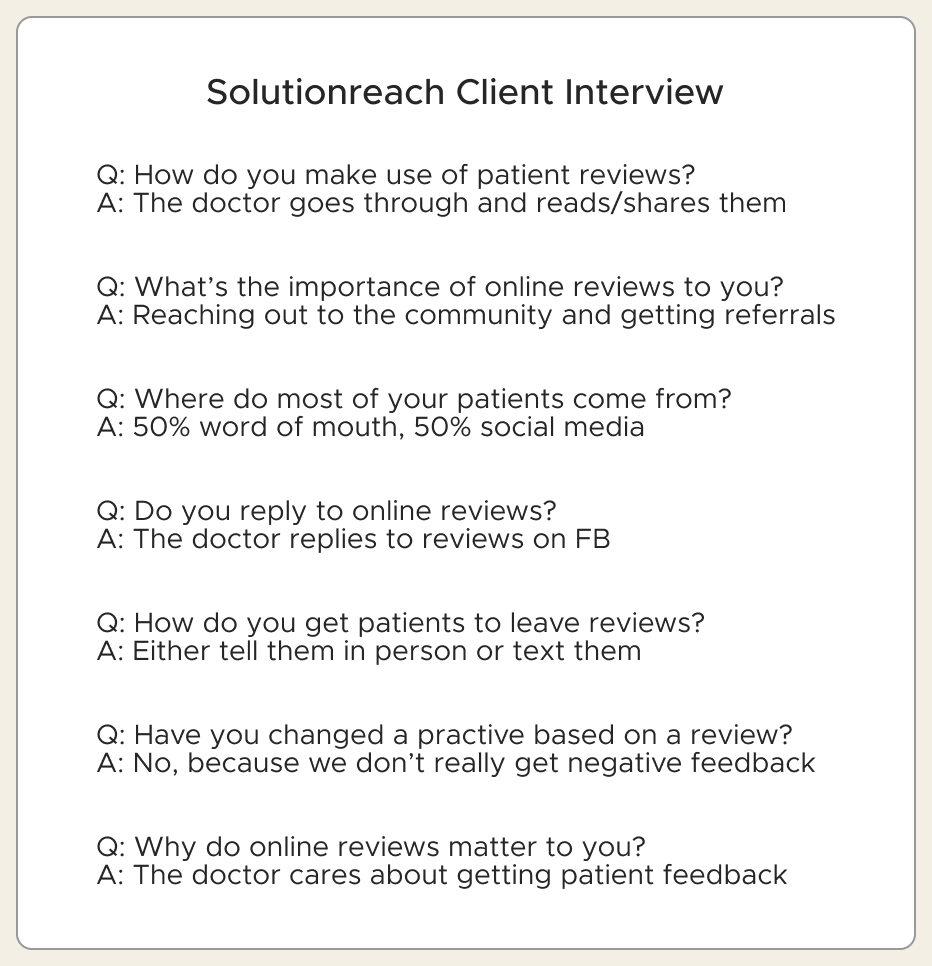
Practices weren't really asking for more reviews — they were asking for visibility. With feedback scattered across platforms, the real need was a single source of truth for their online presence.
Translating research into a working product.
With a clear understanding of what practices actually needed, I worked with PMs to scope the MVP and started building — moving from low-fidelity flows up to validated prototypes.
-
01Defining the MVP
Scoping what to ship first.
Worked with PMs to translate research findings into business requirements and identify a minimum viable product — focusing on the core monitoring workflow without scope creep.
-
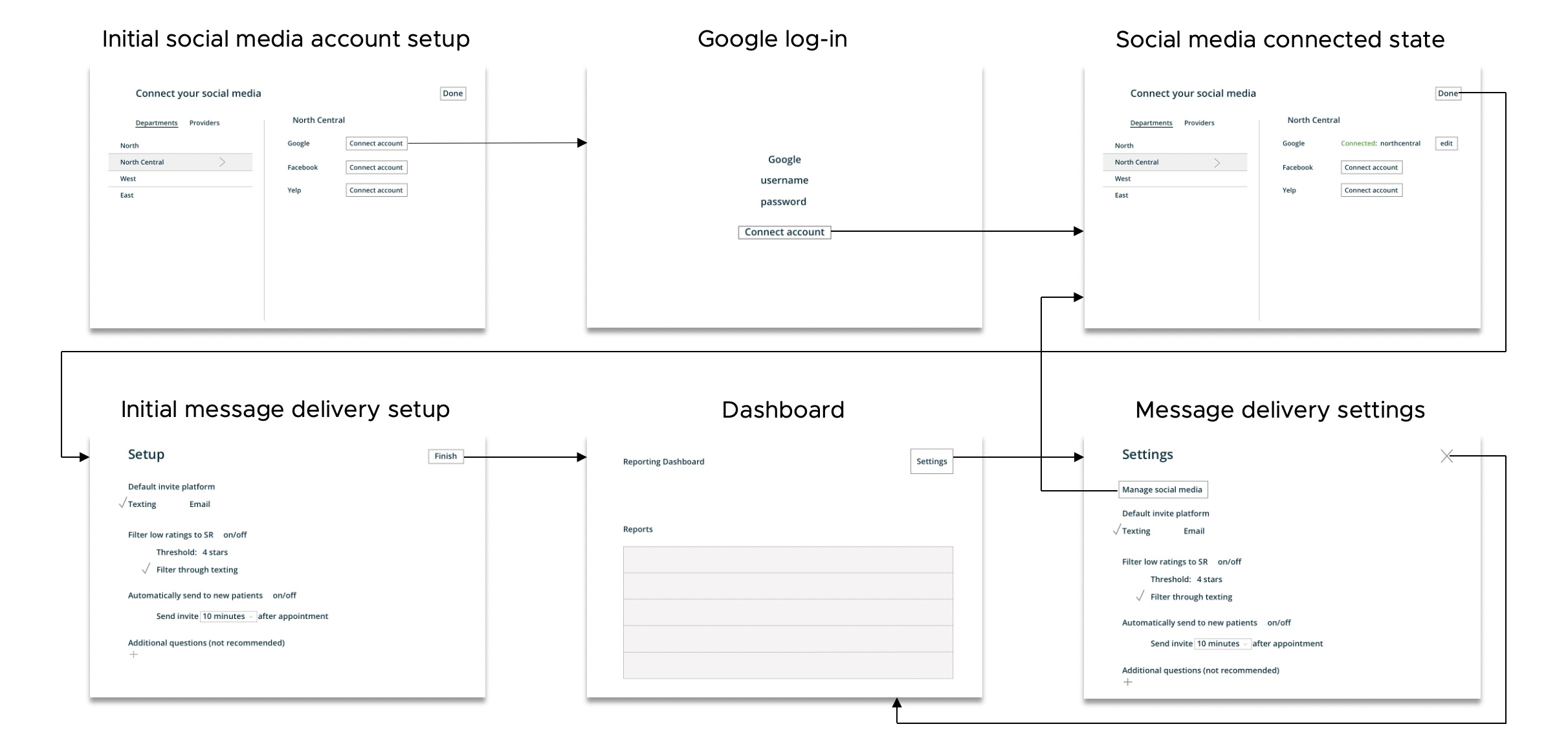
02Information architecture
Mapping flows before screens.
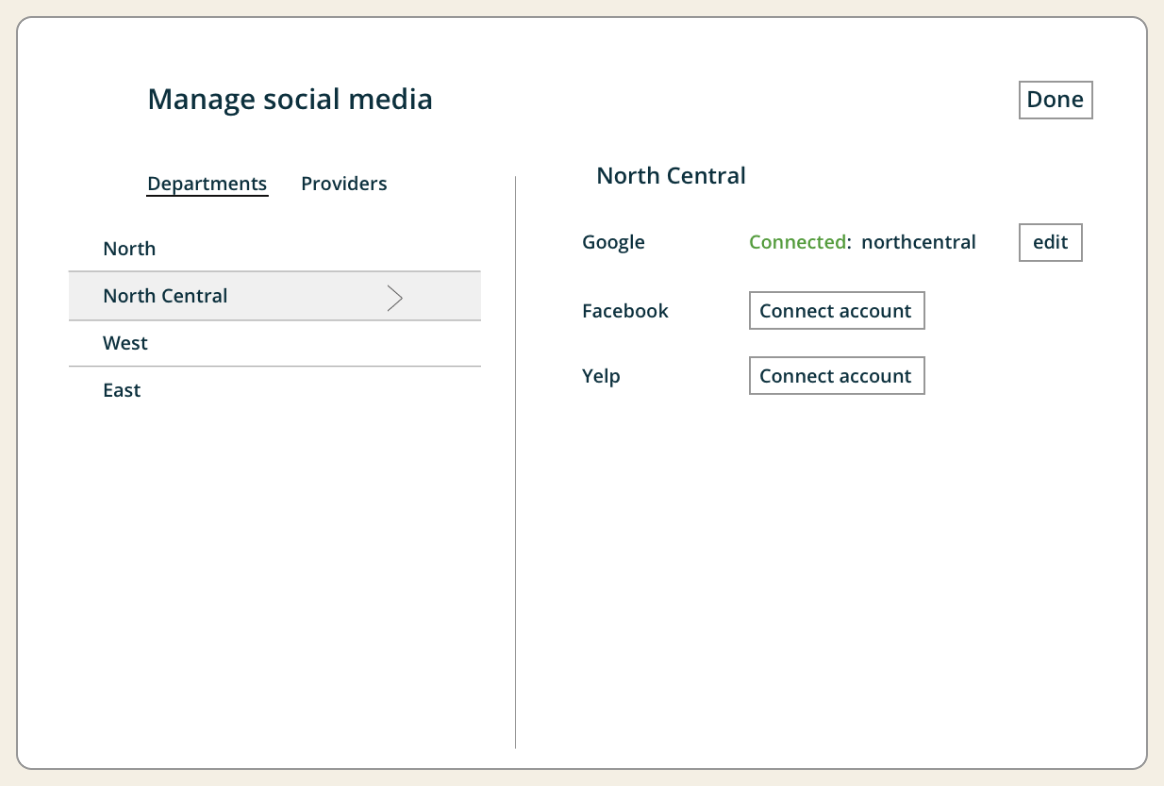
Built user flows to define how practices would set up their connected accounts, monitor incoming reviews, and act on what they saw. The flows surfaced every screen the product needed before any pixels got pushed.
-
03Iterating to fidelity
Validating through prototypes.
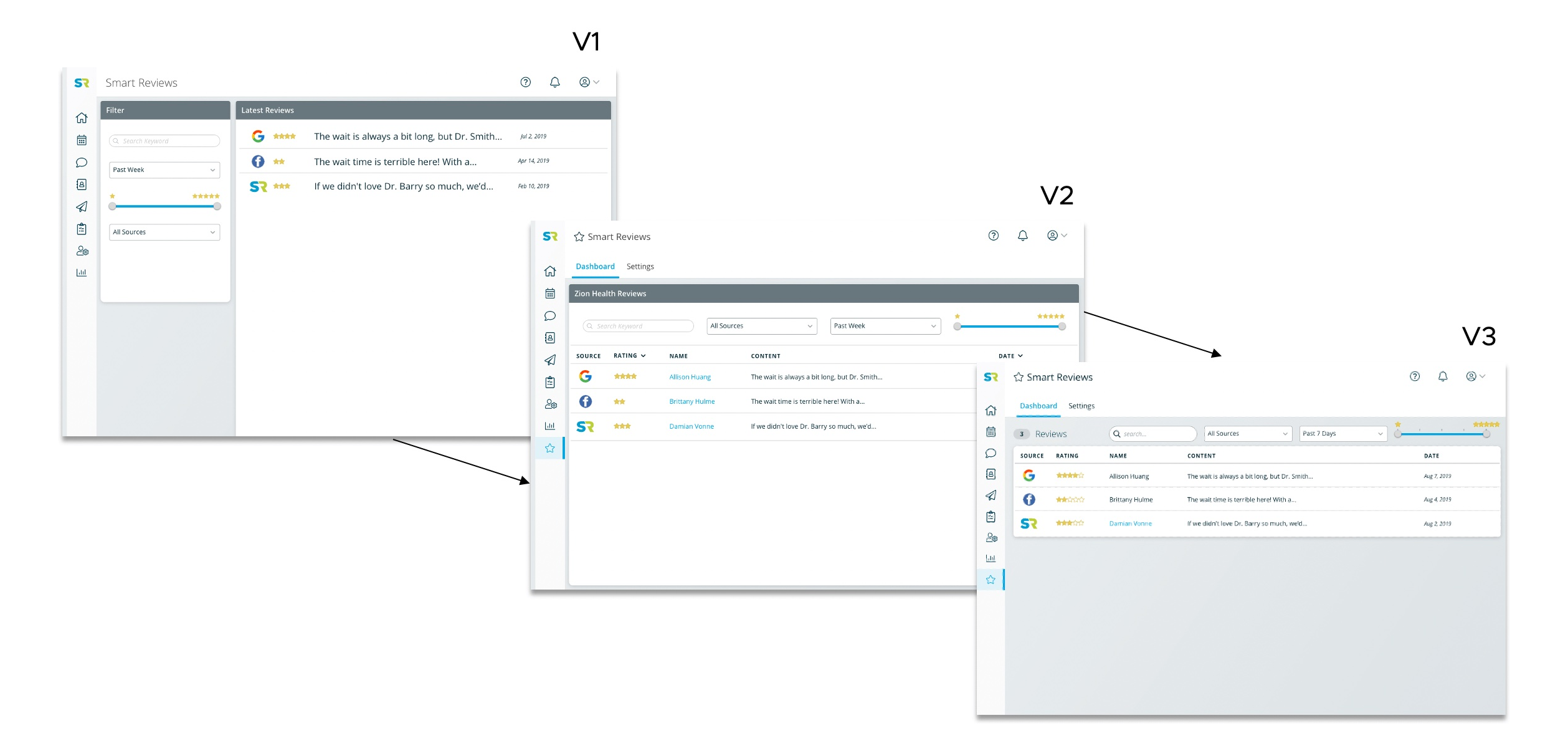
Through validation testing and weekly UX team showcases, low-fidelity wireframes evolved into higher-fidelity prototypes. Each round tightened both the flows and the individual screens.
A single source of truth for review activity.
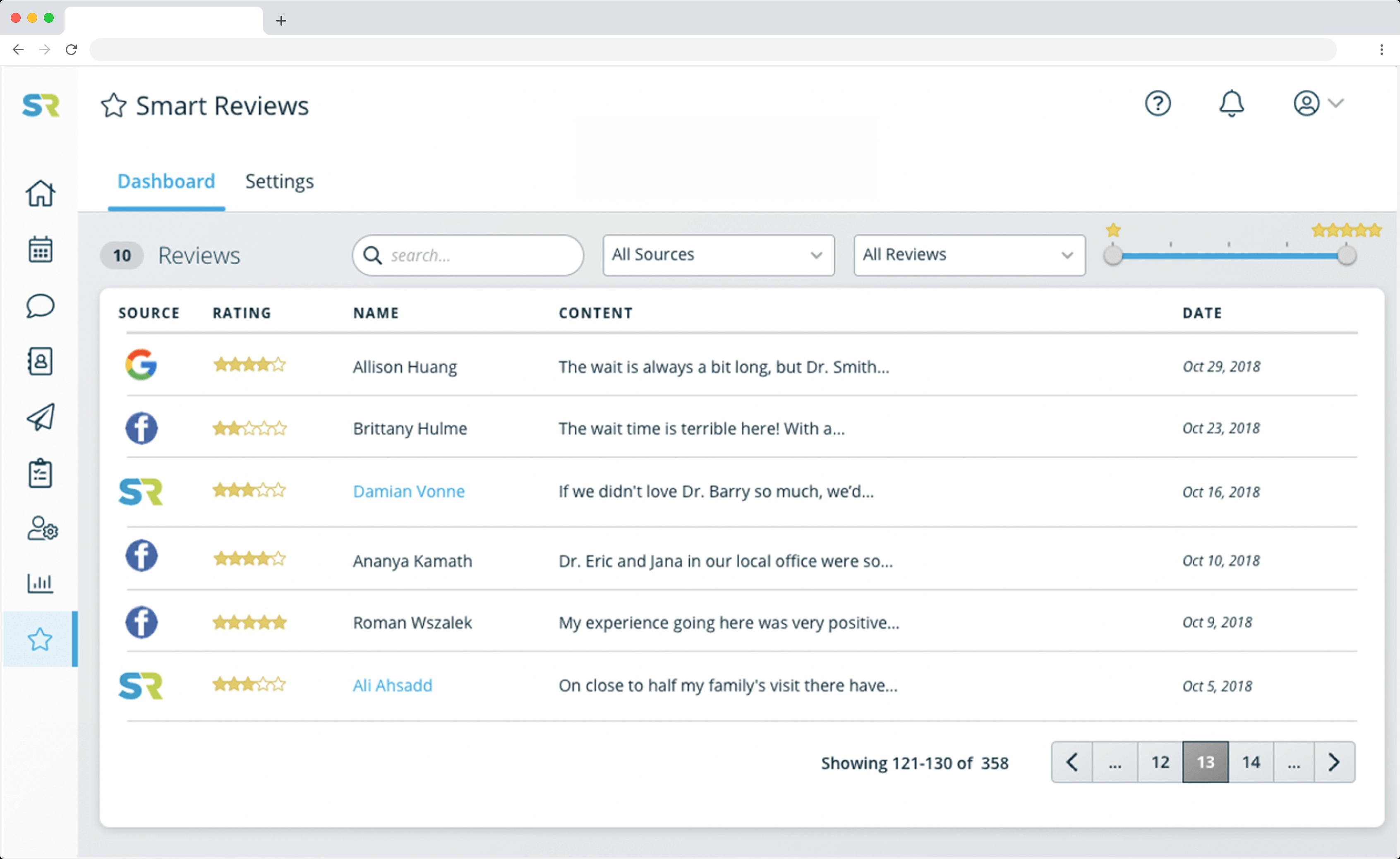
The shipped product gave practices what they had been working around — one place to see every review, from every connected platform, without ever needing to leave the Solutionreach dashboard.
Smart Reviews pulled patient reviews from across connected platforms — Google, Facebook, and the practice's Solutionreach profile — and presented them in a single sortable list. Practices could filter by source, search by content, and respond to anything that needed attention. What had been a manual, multi-tab process became a single screen built into a tool they were already using every day.
What shipped, and what it enabled.
- Shipped the first complete version of Smart Reviews — taking it from discovery research through working product, integrated into the broader Solutionreach platform.
- Delivered prototypes of future iterations that the team continued building from for six months after my role ended.
- Validation testing showed strong customer excitement for the features in scope, confirming the visibility-first framing that drove the design.
- Smart Reviews became a recurring talking point in the platform's sales pitch, used to showcase the broader SR Health offering.
What I'd do differently, and what stuck with me.
- Validate impact with quantitative metrics post-launch — dashboard engagement, response rates, and time-to-acknowledge for negative reviews.
- Push deeper on cross-site review aggregation — the MVP covered the major platforms, but a more comprehensive integration would've made the dashboard significantly stickier.
- Build stronger feedback loops between the product and customer support to surface usage patterns that didn't show up in early validation.
A customer ask points at a need — but rarely at the shape of the right product. Discovery's real job is to find what's actually worth building.